
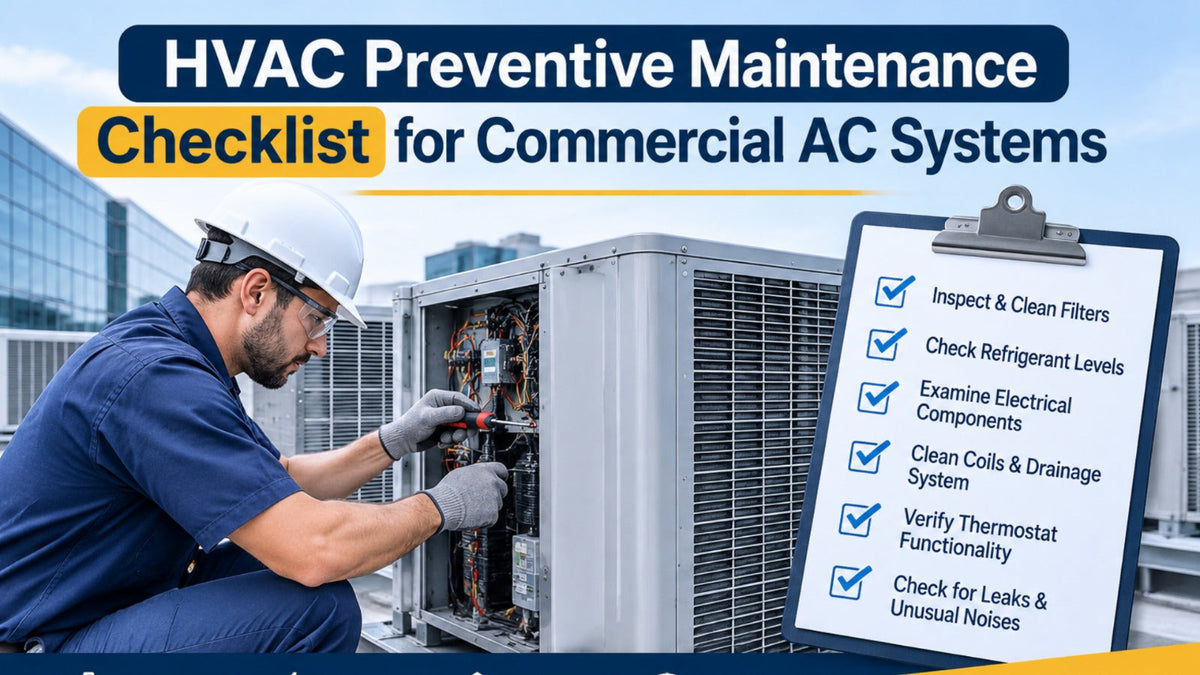
A commercial air conditioning system is an important part of a building's daily operations. It supports indoor comfort, helps maintain suitable working conditions, and provides controlled environments for activities that depend on stable temperatures.
Unlike residential air conditioners, commercial installations often serve several areas simultaneously. Their equipment may include packaged AC units, chillers, air handling units, cooling towers, ventilation networks, and automated control systems. Each component has a specific function, and a problem in one section can influence the performance of the entire installation.
This makes planned equipment care an important responsibility for facility management teams. Instead of waiting for cooling complaints or unexpected equipment shutdowns, businesses need a maintenance strategy that evaluates system condition at regular intervals.
A properly designed commercial HVAC maintenance checklist helps technicians organise inspections, recognise early warning signs, and determine which components require cleaning, adjustment, or repair.
Understanding the Maintenance Requirements of Commercial AC Systems
Cooling systems work under different scenarios according to their application. For instance, a hospital may need cooling 24 hours a day, whereas an industrial warehouse will have a variable cooling demand during the day.
Such differences affect the frequency of equipment inspection and the areas that need to be focused on.
A practical maintenance programme should consider:
-
Equipment design, capacity, and installation location.
-
Daily operating hours and seasonal cooling demand.
-
Indoor occupancy and outdoor environmental conditions.
-
Previous equipment failures and service history.
-
Manufacturer instructions and applicable maintenance standards.
The purpose is to develop an inspection routine that reflects actual operating conditions rather than applying an identical service plan to every AC unit.
Critical Inspection Areas in Commercial HVAC Maintenance
1. Air Handling and Filtration Equipment
The air handling Unit (AHU) controls the flow of the treated air throughout the structure. The efficiency of this component is dependent on proper filtration, open air pathways, and working fans.
When inspecting, technicians need to inspect the entire air pathway and not just the air filter.
Important checks include:
-
Examine filter media for uneven dust accumulation or physical deterioration.
-
Check whether filters fit correctly inside their frames.
-
Inspect return-air sections for obstructions.
-
Examine fresh-air intake openings and ventilation dampers.
-
Compare filter pressure drop with the recommended operating range.
-
Investigate complaints about weak airflow in individual zones.
An incorrect filter specification can also affect system airflow. Replacement filters should match the equipment manufacturer's requirements and the intended filtration performance.
2. Cooling Coils and Heat Transfer Performance
Cooling coils are responsible for transferring thermal energy between air and refrigerant or chilled water, depending on the system design.
Their condition has a direct influence on heat transfer. Deposits on the coil surface create an additional barrier and may interfere with normal airflow.
Technicians should inspect:
-
Coil surfaces for dust, grease, and accumulated contaminants.
-
Aluminium fins for deformation or corrosion.
-
Chilled-water connections and valves where applicable.
-
Refrigerant line insulation around direct-expansion equipment.
-
Condenser surroundings for restricted air circulation.
Cleaning methods should be selected according to the coil material and equipment instructions. A visual inspection after cleaning helps confirm that the fins and surrounding components remain undamaged.
3. Condensate Management and Moisture Control
Water evacuation is an essential aspect of the cooling process, but it is essential that the water gathered during the operation should be drained safely.
If the Condensate drainage system is not properly maintained, it will lead to leakage issues, odors, and moisture formation in mechanical rooms and areas where people work.
It is necessary for technicians to check the drain pan, piping, traps, pumps, and safety switches.
It is advisable that instead of merely draining the water, the cause of frequent overflow needs to be investigated by the technicians.
4. Mechanical Drive Assemblies
The commercial air handling and ventilation systems can have more than one motor, fan, bearing, belt, pulley, and flexible connection.
Such assemblies need to be checked for their mechanical condition when the equipment is in operation under test conditions.
Pay attention to:
-
Changes in fan operating sound.
-
Excessive vibration during operation.
-
Worn or incorrectly aligned drive belts.
-
Loose mounting arrangements.
-
Abnormal motor temperature.
-
Bearing condition and manufacturer-specified lubrication requirements.
Where vibration analysis is part of the facility's maintenance programme, recorded readings can help identify deterioration before visible mechanical damage develops.
5. Electrical Distribution and Motor Controls
The operation of commercial air conditioning equipment relies on electrical panels and controls for the functioning of compressors, motors, pumps, and the ventilation system.
The inspection should encompass the state of available wiring, terminals, switchgear, and protection mechanisms.
Electrical staff members should analyze the presence of any indications of overheating, damaged insulation, poor connections, or electrical anomalies.
The motor currents and supply voltages should be checked relative to the specifications of the equipment itself.
Any tripping, unexpected shutdown, or burned-out electrical components call for a proper fault analysis. The protection devices must never be bypassed.
6. Refrigeration Circuit and Compressor Condition
The refrigeration circuit is the essence of a direct-expansion system of air conditioning. The circuit comprises a compressor, condenser, expansion valve, evaporator, and pipework connections.
During the maintenance process, one needs to consider whether the system works under the required conditions.
Useful inspection activities include:
-
Examining accessible piping joints and service connections.
-
Looking for possible refrigerant leakage indicators.
-
Checking suction and discharge conditions.
-
Recording refrigerant line temperatures.
-
Assessing compressor operating sound and electrical load.
-
Reviewing abnormal pressure-related shutdowns.
The interpretation of pressure measurements on the refrigerant side depends on the refrigerant being used, load, environmental conditions, and other parameters as specified by the manufacturer. Pressure measurements alone should not be the reason to change the refrigerant charge.
In case of leakage, suitable procedures of detection and repairs should be done.
7. Automation, Sensors, and Operating Logic
Modern commercial buildings often use building management systems (BMS) to synchronize equipment operations.
Such systems could provide temperature setpoints, operating schedules, damper positions, alarm signals, and sequence of equipment.
The check should determine whether the control system operates properly according to real needs of the building.
It includes calibration of sensors, programming of schedules, actuation, communications problems, and repetitive alarms on the controllers.
For bigger buildings, analysis of trends in the BMS system could show operating patterns which would not be visible during a brief service call.
8. Equipment Structure and Surrounding Installation
The condition of the installation area also deserves attention. Even properly maintained Commercial AC equipment may experience operating problems when its surroundings restrict access or ventilation.
Inspect the equipment base, mounting arrangements, weather protection, access panels, service clearances, and visible external damage.
For rooftop installations, technicians should also check for accumulated debris, standing water, damaged weatherproofing, and possible corrosion.
Maintaining adequate access around equipment makes future inspection and repair work easier and safer.
How Facility Managers Can Improve Maintenance Results
Completing inspection tasks is only one part of effective maintenance. The information collected during each service visit should help the facility team make better decisions.
Start with a central equipment register that identifies every AC unit and its location. Maintain a separate HVAC maintence record for each machine so that repeated problems can be traced.
A useful inspection report should include:
Equipment identification: Unit number, model, location, and capacity.
Inspection findings: Physical condition, unusual observations, and identified defects.
Operating information: Relevant temperatures, electrical readings, pressures, and alarm details.
Corrective recommendations: Parts requiring replacement, repairs needed, and further diagnostic work.
Maintenance status: Completed tasks, pending work, and the next inspection date.
This information makes it easier to distinguish an isolated fault from a recurring equipment problem.
Common Reasons Commercial AC Maintenance Programmes Fail
Even in cases where service appointments are made, maintenance will not provide the desired results if some critical points are left out.
One such challenge includes the focus on cleaning processes without taking into account equipment readings. The other includes continuous fixing of the same part without understanding why the failure occurs in the first place.
Inadequate documentation poses another challenge especially in cases where several technicians have worked on the same equipment. It becomes difficult to detect changes in performance if there are no previous readings and repairs to refer to.
It is imperative that facility managers go through the maintenance report and focus on fixing defects that remain unresolved.
Frequently Asked Questions (FAQs)
1. What is HVAC preventive maintenance?
It is the regular inspection, cleaning, and servicing of HVAC equipment to maintain reliable operation.
2. How often should commercial AC systems be serviced?
Commercial AC systems should be inspected monthly or quarterly, depending on usage and manufacturer recommendations.
3. What does a commercial HVAC maintenance checklist include?
It includes filters, coils, drainage, fans, motors, electrical components, refrigerant circuits, and thermostats.
4. Why is preventive maintenance important?
It helps identify equipment problems early, maintain cooling performance, and reduce unexpected breakdowns.
5. Who should perform commercial HVAC maintenance?
Qualified HVAC technicians should handle technical inspections, electrical testing, refrigerant work, and specialised servicing.
6. What are the signs that an AC system needs maintenance?
Weak airflow, poor cooling, unusual noise, water leakage, and frequent shutdowns are common warning signs.