
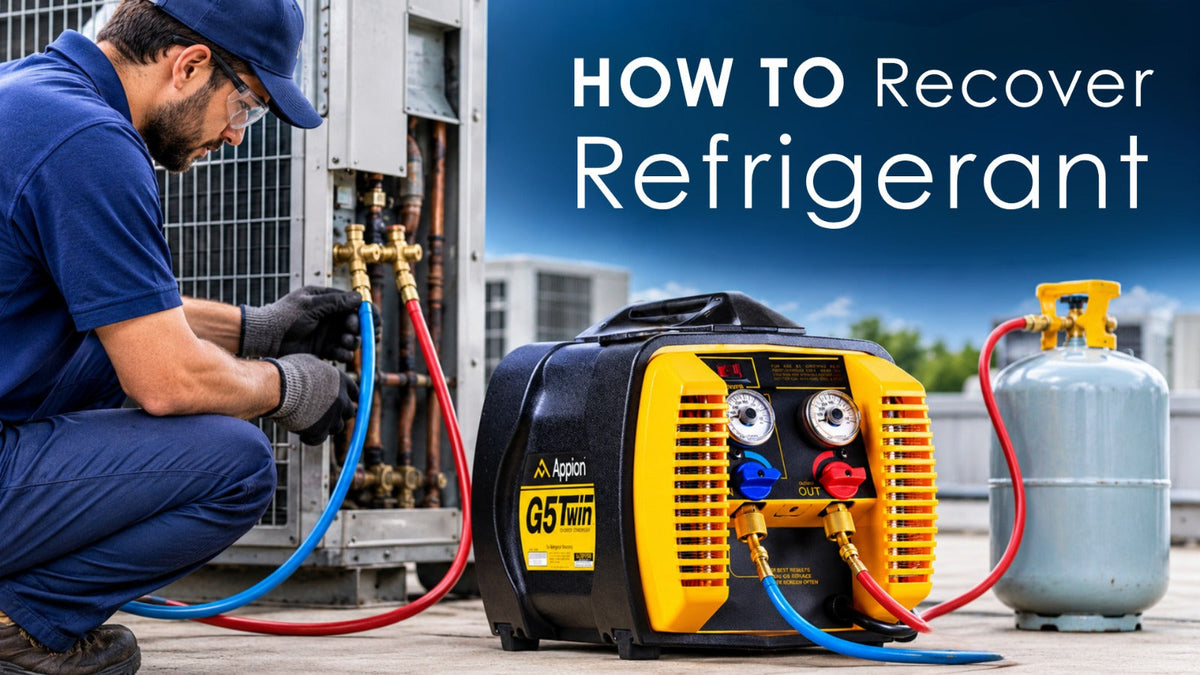
Refrigerant recovery is an important part of HVAC service Industry, whenever a system needs repair, component replacement, relocation, or decommissioning. Instead of releasing refrigerant into the atmosphere, a technician removes it and stores it in a suitable recovery cylinder. This reduces refrigerant loss, protects the environment, and allows the gas to be assessed for reuse or reclamation.
A correct refrigerant recovery procedure is more than connecting hoses and switching on a machine. Technicians must identify the refrigerant, use compatible equipment, monitor cylinder weight and pressure, and follow the recovery machine manufacturer's instructions.
What Is Refrigerant Recovery?
Refrigerant recovery is the controlled removal of refrigerant from an air-conditioning or refrigeration system into an external, approved container. The gas is stored without necessarily being cleaned or tested. Recycling removes certain contaminants, while reclamation processes refrigerant to meet a defined purity standard.
Recovery is mandatory before a closed circuit can be opened for maintenance which may include a compressor, condenser, evaporator, or piping replacement. It is also required when equipment is relocated or permanently removed.
Tools Required for HVAC Refrigerant Recovery
Before starting HVAC refrigerant recovery, check that the tools are suitable for the system and refrigerant.
Essential Equipment
-
Refrigerant recovery machine: Transfers refrigerant into the cylinder and must be compatible with the refrigerant.
-
Refrigerant recovery cylinder: A refillable, pressure-rated container approved for the refrigerant being handled.
-
Manifold gauge set and hoses: Provide system access and pressure monitoring; all fittings must be rated for the expected pressure.
-
Weighing scale: Measures the amount collected and helps prevent cylinder overfilling.
-
Inline filter or filter-drier: Helps protect the machine from particles and contaminants.
-
Safety equipment: Goggles and suitable gloves help protect against refrigerant contact and cold burns.
Never use a disposable charging cylinder to store recovered refrigerant.
How to Recover Refrigerant from an HVAC System
The following is a general workflow for trained HVAC technicians. Always follow the equipment manual and the safety requirements for the specific refrigerant.
1. Identify the Refrigerant and Prepare the Work Area
Verify the refrigerant by checking the unit's service records or nameplate. It is not suitable to assume the type based on the age of the refrigerant. If the refrigerant is not known or if it is mixed or contaminated with other gases, it should be kept in separate and suitable recovery equipment.
Switch off and isolate the unit from its electrical supply. Work in a well-ventilated area and wear suitable protective equipment. Flammable refrigerants such as R-32 and hydrocarbons require additional precautions and equipment suitable for their safety classification.
2. Select and Inspect the Recovery Cylinder
Choose a clean, approved refrigerant recovery cylinder compatible with the refrigerant. Inspect the labels, valves, and connections, and make sure its capacity is sufficient for the anticipated charge.
Using a weight scale, set the cylinder upright and check its initial weight. Avoid combining refrigerants in a cylinder. Ozone Cell guidance for Indian technicians advises using suitable certified cylinders and keeping the fill within the permitted limit. As a general rule, do not exceed 80% of the cylinder's internal volume; the allowable refrigerant weight depends on the gas and cylinder rating.
3. Connect the Recovery Equipment
According to the connection diagram of the machine, connect the manifold hoses and the recovery unit. Depending on the system, access may be through high-side and low-side service ports or other approved points. Use an inline filter where recommended, and keep hoses as short and unrestricted as practicable.
Before starting, ensure that the connection is in order and the valves are in proper positions. Purge air from the hoses using the machine's prescribed procedure. Never release refrigerant into the atmosphere to clear a hose.
4. Choose the Appropriate Recovery Method
Three common methods are used:
Vapour recovery: Removes refrigerant in vapour form. It is commonly used for smaller charges and for collecting the vapour left after liquid recovery.
Liquid recovery: The liquid refrigerant is extracted with a specific apparatus. It is ideal for situations when a significant quantity of liquid is present.
Push-pull recovery: Uses a pressure difference to move bulk liquid from a suitable system receiver into the cylinder. This solution can be used only with compatible system designs and needs to be followed by vapor recovery.
Not every system supports every method. Check the system design and machine manual before choosing one.
5. Operate the Machine and Monitor the Process
Start the refrigerant recovery machine according to its operating instructions. Monitor manifold gauges, machine conditions, cylinder temperature, and scale readings throughout the process. Do not leave the equipment unattended.
If the cylinder approaches its permitted fill limit, stop and change to another suitable cylinder using the correct isolation procedure. Stop immediately if you notice a leak, abnormal noise, or excessive pressure.
Complete the process till the end-of-recovery point set by the manufacturer and local regulations. You should not use one value of pressure as a universal limit, the ending point will be different depending on the type of the unit and the refrigerant.
6. Isolate and Secure the Equipment
When recovery is complete, close the relevant valves and use the machine's self-purge function if provided. This helps transfer refrigerant remaining in the machine and hoses into the cylinder. Disconnect carefully, fit protective caps, and check for leaks.
Record the refrigerant type and quantity recovered. Label the cylinder, keep it upright and secured, and store it away from heat and direct sunlight.
Common Refrigerant Recovery Mistakes to Avoid
-
Venting refrigerant instead of recovering it.
-
Using a machine or cylinder that is incompatible with the refrigerant.
-
Mixing refrigerants or adding unknown gas to a clean cylinder.
-
Overfilling a cylinder or ignoring its rated weight and pressure limits.
-
Using damaged hoses, loose fittings, or unsuitable gauges.
-
Skipping vapour recovery after a push-pull or liquid transfer.
-
Ignoring extra precautions for flammable or high-pressure refrigerants.
What Happens to Refrigerant After Recovery?
Recovered refrigerant should be assessed before reuse. Recycling usually takes away oil or other impurities, making the gas reusable, where applicable. Reclamation is more thorough: a specialised facility processes and tests the refrigerant to restore it to a defined purity standard.
Mixed or contaminated refrigerant should be kept separate and sent to an appropriate facility rather than charged into another system without verification.
Conclusion
Proper refrigerant recovery is a core HVAC service practice. Identifying the gas, selecting a compatible refrigerant recovery machine, using the correct cylinder, monitoring its weight, and following the right method all contribute to safer, more reliable servicing. These practices also reduce refrigerant loss and environmental impact.
Refrigerant handling should be performed by trained technicians using the system and machine manuals, suitable protective equipment, and applicable Indian ODS and cylinder-handling requirements.
Frequently Asked Questions
1. Is refrigerant recovery the same as evacuation?
No. Recovery removes refrigerant and stores it in a cylinder. Evacuation is a separate step that uses a vacuum pump to remove air and moisture after recovery and repair.
2. Can different refrigerants be stored in one recovery cylinder?
No. Keep each refrigerant type separate. Mixing gases can contaminate the recovered refrigerant and make it difficult to identify, recycle, or reclaim.
3. Why should a recovery cylinder not be filled completely?
Refrigerant expands as its temperature rises. Leaving vapour space helps prevent excessive pressure and cylinder damage. Follow the cylinder's rated fill weight and applicable limit; do not exceed 80% of its internal volume where that limit applies.