
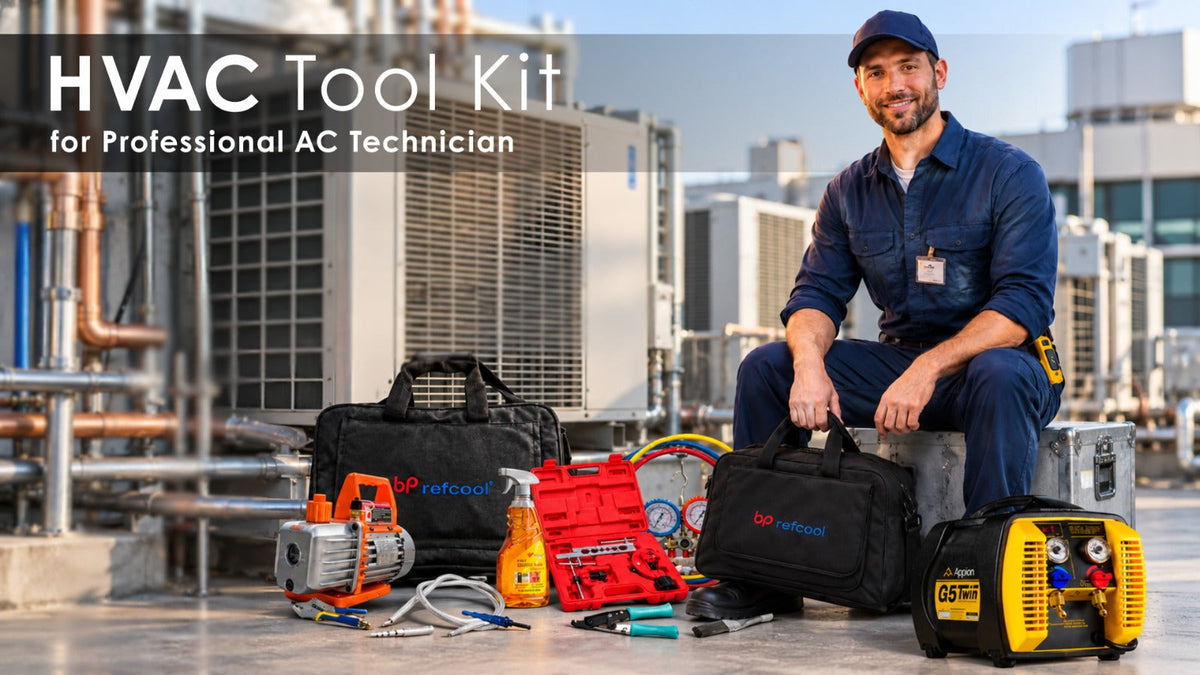
An air conditioning technician needs more than a screwdriver and a pair of pliers to complete a service job properly. From installing split AC units to diagnosing cooling problems and repairing refrigerant leaks, every task requires the right equipment.
A well-organised HVAC tool kit helps technicians perform inspections, identify faults, handle refrigerants, and complete maintenance work more efficiently. Carrying suitable tools also reduces unnecessary delays and helps prevent damage to air conditioning components.
Whether you are an experienced HVAC professional or starting your career in AC servicing, understanding which tools to carry is essential. This guide covers the important tools every professional AC technician should consider for installation, maintenance, troubleshooting, and repair.
What Is an HVAC Tool Kit?
An HVAC tool kit is a collection of specialised tools and equipment used for installing, maintaining, inspecting, and repairing heating, ventilation, air conditioning, and refrigeration systems.
Unlike a basic household toolbox, a professional AC technician's toolkit includes electrical testing instruments, refrigerant service equipment, pipe-working tools, and safety accessories.
The exact equipment depends on the technician's work. Someone handling residential split AC installations may need a different setup from a technician servicing commercial chillers or industrial refrigeration systems.
Essential HVAC Tools Every Professional AC Technician Should Carry
A professional HVAC toolkit should cover five important areas: general repairs, electrical testing, refrigerant servicing, installation, and safety.
1. Basic Hand Tools for AC Installation and Repair
Hand tools are required for everyday installation and maintenance tasks. They help technicians open equipment panels, tighten connections, remove components, and perform minor repairs.
Important hand tools include:
Screwdriver set: Used for opening AC panels, terminal covers, and electrical enclosures. Both Phillips and flat-head screwdrivers are useful.
Adjustable wrench: Helps loosen and tighten nuts, bolts, and pipe connections.
Combination pliers: Useful for gripping, bending, and holding wires or small components.
Wire stripper and cutter: Used for preparing electrical wires during installation and repair.
Allen key set: Required for working with different fasteners and certain AC components.
Socket and spanner set: Helps technicians work with different sizes of nuts and bolts.
Measuring tape: Useful for measuring copper pipes, installation distances, and mounting positions.
These tools form the foundation of an AC technician tool kit and should be available during most service visits.
2. Electrical Testing Tools for Troubleshooting
Electrical problems are among the common reasons an air conditioner stops working correctly. A technician needs suitable testing instruments to identify faults instead of replacing components without proper diagnosis.
The essential electrical tools include:
Digital Multimeter: Measures voltage, resistance, and continuity. It helps check electrical connections, sensors, wiring, and other components.
Clamp Meter: Measures electrical current without disconnecting the conductor, making it useful for checking compressor and motor current within the instrument's rated limits.
Non-Contact Voltage Tester: Helps identify the presence of AC voltage without directly touching exposed conductors. It should not replace proper isolation and voltage verification.
Insulation Resistance Tester: Used to assess electrical insulation in motors, wiring, and other suitable equipment.
Temperature Meter: Helps measure air and component temperatures during performance checks. A suitable probe thermometer can provide more reliable contact measurements.
Technicians should select instruments with appropriate measurement ranges and safety ratings for the electrical systems they service.
3. Refrigerant Charging and Pressure Testing Equipment
Refrigerant-related work requires specialised equipment because incorrect charging or poor handling can affect system performance and safety.
The following tools are particularly important:
Manifold Gauge Set: Measures refrigerant pressure on the high-pressure and low-pressure sides of an AC system. Digital manifold gauges can provide additional measurements and calculations.
Refrigerant Charging Hose: Connects service equipment to the refrigeration system. Hoses and fittings must be compatible with the refrigerant and operating pressure.
Refrigerant Weighing Scale: Measures the refrigerant quantity during charging and recovery.
Refrigerant Leak Detector: Helps identify refrigerant leaks that may not be visible during a normal inspection.
Nitrogen Regulator: Controls nitrogen pressure during suitable pressure-testing and brazing procedures.
Technicians should always confirm refrigerant compatibility before selecting gauges, hoses, fittings, and charging equipment.
4. Vacuum Pumps and Refrigerant Recovery Machines
Two important pieces of equipment for professional refrigeration servicing are vacuum pumps and refrigerant recovery machines. Although both work with the refrigerant circuit, they perform different functions.
Vacuum Pump
A vacuum pump removes air, moisture, and other non-condensable gases from an appropriately prepared refrigeration circuit before charging. It is especially important during new AC installations and repairs that require opening the system.
A digital micron gauge helps measure the vacuum level more accurately than relying only on the pump's running time or manifold reading.
Refrigerant Recovery Machine
A recovery machine transfers refrigerant from an AC or refrigeration system into an appropriate recovery cylinder. It is used when equipment needs servicing, repair, or refrigerant removal.
The recovery machine, hoses, and cylinder must be suitable for the refrigerant being handled. Refrigerant should not be deliberately released into the atmosphere during servicing.
5. Copper Pipe Installation and Brazing Tools
Copper tubing connects important components in many air conditioning and refrigeration systems. Poor pipe preparation or incorrect joining can cause leaks and affect system performance.
A professional AC technician should consider carrying:
Copper Tube Cutter: Produces clean cuts when preparing refrigerant pipes.
Deburring Tool: Removes sharp edges and internal burrs after cutting.
Flaring Tool: Creates flared connections where the equipment design requires them.
Tube Bender: Helps bend copper pipes without unnecessary flattening or kinking.
Pipe Expander: Supports suitable expanded-tube connections.
Brazing Torch: Used for joining compatible copper components with the correct brazing materials and procedures.
Torque Wrench: Helps tighten flare connections according to the equipment manufacturer's specifications.
Correct pipe preparation and joint quality are important for reducing refrigerant leakage and avoiding repeat repairs.
6. Safety Equipment for HVAC Technicians
Safety equipment should be considered a necessary part of every professional HVAC tool kit, not an optional addition.
Technicians often work with electrical connections, pressurised refrigerants, sharp metal edges, and hot brazing equipment.
Essential personal protective equipment includes:
Safety goggles to protect the eyes.
Insulated gloves suitable for the electrical task.
Cut-resistant gloves for handling sharp components.
Safety shoes with appropriate protection.
Respiratory protection where the job-specific risk assessment requires it.
A first-aid kit for basic emergency preparedness.
Technicians performing outdoor installations may also need suitable head protection and fall-protection equipment.
Always isolate electrical supplies before working on electrical components and follow the manufacturer's instructions and applicable safety procedures.
HVAC Tool Kit Checklist: Basic vs Professional Equipment
Not every technician needs to purchase every specialised instrument immediately. The following comparison helps identify the equipment required at different experience and service levels.
Tool Category
Manifold gauge set
Digital gauges, compatible hoses, charging scale
Vacuum pump and micron gauge
Leak detection solution
Electronic refrigerant leak detector
Tube cutter, flaring tool
Tube bender, expander, torque wrench
Compatible recovery machine and cylinder
How to Choose the Right HVAC Tool Kit?
Choosing an HVAC toolkit is not just about purchasing more tools. The equipment should match the type of work, systems, and refrigerants a technician handles.
Consider these factors before buying:
Type of AC work: Residential installation, commercial HVAC maintenance, and refrigeration repair require different equipment.
Tool quality: Choose durable tools suitable for regular professional use.
Measurement accuracy: Select reliable electrical and temperature-testing instruments.
Refrigerant compatibility: Check that gauges, hoses, recovery machines, and fittings support the intended refrigerants.
Portability: A well-organised carrying case makes it easier to transport tools between service locations.
Manufacturer support: Check product instructions, spare parts availability, warranty, and maintenance requirements.
Investing in the right equipment can help technicians avoid unnecessary replacements and complete servicing tasks with better consistency.
Common Mistakes to Avoid When Carrying AC Technician Tools
Even experienced technicians can face problems when their tools are poorly selected or maintained.
Avoid these common mistakes:
Using damaged or inaccurate measuring instruments.
Selecting manifold gauges or hoses without checking refrigerant compatibility.
Charging refrigerant without weighing the quantity when the manufacturer's procedure requires it.
Skipping proper evacuation after opening the refrigerant circuit.
Using incorrect tools for flare connections.
Ignoring personal protective equipment during electrical and brazing work.
Carrying unnecessary equipment while missing essential service instruments.
A regular inspection of the toolkit helps ensure that instruments remain functional and ready for the next job.
Conclusion
A complete HVAC tool kit plays an important role in professional AC installation, servicing, and troubleshooting. From basic hand tools and electrical testing instruments to manifold gauges, vacuum pumps, leak detectors, and refrigerant recovery machines, every tool has a specific purpose.
Technicians should build their toolkit according to the equipment they service, refrigerants they handle, and safety requirements of each job. Rather than purchasing everything at once, start with essential tools and gradually add specialised equipment as your work expands.
Choosing reliable HVAC service tools is a practical investment in accurate diagnosis, quality workmanship, and professional maintenance.
Frequently Asked Questions
1. What tools should a professional AC technician carry?
A professional AC technician should carry screwdrivers, pliers, adjustable wrenches, a digital multimeter, clamp meter, manifold gauge set, vacuum pump, leak detector, tube cutter, flaring tool, and appropriate safety equipment.
2. What is the most important tool in an HVAC tool kit?
There is no single tool for every job. A multimeter is essential for electrical troubleshooting, while a manifold gauge set, vacuum pump, and leak detector are important for refrigerant-system servicing.
3. Which tools are required for AC gas charging?
Common equipment includes a compatible manifold gauge set, refrigerant charging hoses, a refrigerant weighing scale, and suitable refrigerant cylinders. The charging procedure must follow the AC manufacturer's specifications.
4. Why does an AC technician need a vacuum pump?
A vacuum pump removes air and moisture from an appropriately prepared refrigeration circuit before refrigerant charging. A separate micron gauge helps verify the vacuum level.
5. What is the difference between a vacuum pump and a refrigerant recovery machine?
A vacuum pump removes air, moisture, and non-condensable gases from a prepared system. A refrigerant recovery machine transfers refrigerant from the system into a suitable recovery cylinder.
6. Which tools are required for AC copper pipe installation?
Common tools include a copper tube cutter, deburring tool, flaring tool, tube bender, pipe expander, brazing equipment, and torque wrench.
7. How should a technician choose a professional HVAC tool kit?
Choose a toolkit according to the type of AC systems serviced, refrigerants handled, required measurements, equipment compatibility, tool quality, and safety requirements.