
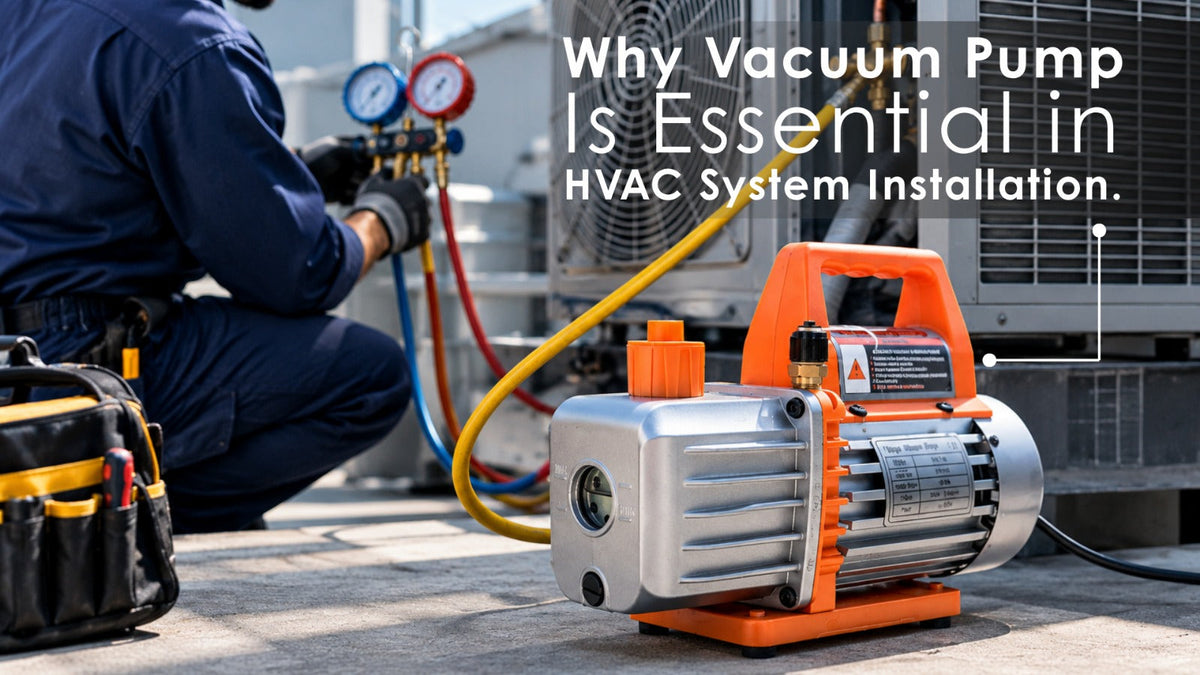
Installing an air conditioning system involves much more than fitting the indoor and outdoor units. Every connection, refrigerant line, and installation procedure contributes to the overall performance of the equipment. One step that deserves particular attention is evacuating the refrigerant circuit before charging it with refrigerant.
During installation, unwanted air and moisture can enter the refrigerant piping. If these contaminants are not removed, they may interfere with normal system operation and create problems that are difficult to identify once the equipment is running.
A vacuum pump helps prevent these issues by removing gases and water vapour from the system before it is put into service. When evacuation is carried out correctly, it helps establish the conditions required for dependable cooling, efficient operation, and long-term equipment reliability.
Understanding the Role of a Vacuum Pump in HVAC Systems
An HVAC vacuum pump is designed to extract gases from a closed refrigeration circuit and reduce its internal pressure to a specified level. As the pressure drops, moisture inside the circuit can evaporate at lower temperatures, making it possible to remove it through the pumping process.
This procedure is commonly known as vacuum evacuation or system evacuation.
It is an important part of installing split air conditioners, commercial cooling equipment, and other refrigeration systems that require field-installed refrigerant piping.
The purpose is not simply to create a vacuum reading on a gauge. It is to remove contaminants from the refrigerant circuit before introducing the refrigerant charge. Achieving this requires appropriate equipment, correctly prepared connections, and a reliable method of measuring the vacuum level.
What Makes Vacuum Evacuation So Important?
1. Helps Keep Moisture Out of the Refrigeration Cycle
Moisture can enter refrigerant piping when open pipe ends are exposed to humid air during installation. Even when the piping appears clean, some water vapour may remain inside the circuit.
Once the system starts operating, this moisture can contribute to several problems. Under certain conditions, it may participate in chemical reactions that produce harmful acids, promote corrosion, or affect the stability of the lubricant. In systems operating at low temperatures, moisture may also freeze at restricted passages and interfere with refrigerant flow.
A vacuum pump helps remove this residual moisture before the system is charged. This is an important precaution for protecting internal components and reducing the likelihood of contamination-related faults.
2. Helps Remove Unwanted Air from Refrigerant Lines
Refrigerant circuits are designed to operate with a specific refrigerant under controlled conditions. Air left inside the system introduces gases that do not condense in the same way as the refrigerant.
Their presence can interfere with heat rejection at the condenser and contribute to elevated condensing pressure. Depending on the operating conditions, the compressor may have to work harder to maintain the required cooling output.
Evacuation removes much of this unwanted gas before the system begins normal operation. This helps the equipment operate closer to its intended design conditions.
3. Supports Consistent Cooling Performance
An air conditioner must transfer heat effectively between indoor and outdoor environments. Its performance depends on several factors, including refrigerant charge, airflow, heat exchanger condition, and operating pressure.
Contaminants inside the refrigerant circuit can disturb this balance. A properly evacuated system starts with fewer unwanted substances that could interfere with normal refrigeration-cycle operation.
Although evacuation does not compensate for incorrect refrigerant charging or poor installation practices, it is an essential step in preparing the equipment to deliver the cooling performance specified by the manufacturer.
4. Helps Protect the Compressor
The compressor is responsible for circulating refrigerant through the HVAC system. Because it is a critical component, preventing avoidable operating problems is an important part of installation and maintenance.
Residual moisture, contamination, and abnormal operating conditions may contribute to lubricant degradation, corrosion, or other reliability issues. The severity of these effects depends on the refrigerant, lubricant, equipment design, and operating environment.
Removing air and moisture during installation helps reduce these risks. Combined with correct refrigerant charging and proper commissioning, evacuation supports more reliable compressor operation and may help avoid unnecessary repair expenses.
5. Improves Installation Quality
A professional HVAC installation should follow a defined process rather than relying on whether the air conditioner switches on successfully.
Evacuation gives technicians an opportunity to prepare the refrigerant circuit and assess its pressure behaviour before charging. After the target vacuum has been reached, the system can be isolated and monitored to identify an unexpected rise in pressure.
This test can reveal signs of a possible leak, residual moisture, or gases continuing to escape from internal surfaces. Additional checks may be necessary to establish the actual cause.
When evacuation is combined with the correct pressure leak test and commissioning procedure, it helps technicians complete the installation with greater confidence.
How Is a Vacuum Pump Used During HVAC Installation?
The evacuation procedure depends on the equipment design and the manufacturer's instructions. However, a typical installation involves the following stages.
Step 1: Check the Refrigerant Piping
Before connecting the vacuum pump, the technician inspects the refrigerant lines, joints, and service connections. The system must undergo the appropriate pressure and leak checks using the specified procedure and compatible equipment.
Finding and correcting leaks before evacuation helps prevent wasted time and repeated work.
Step 2: Connect the Evacuation Equipment
The vacuum pump is connected to the system through suitable hoses and service fittings. Proper connections are important because restrictions in the evacuation setup can slow the removal of gases.
Where appropriate, large-diameter, low-restriction hoses and suitable service connections can improve evacuation speed.
Step 3: Reduce the System Pressure
Once the connections have been checked, the pump is operated to remove air and other gases from the circuit.
As the pressure falls, moisture trapped within the system can evaporate more readily. The pump then removes the resulting water vapour along with the remaining gases.
The required evacuation time varies with the circuit volume, moisture content, pump performance, and setup. For this reason, a fixed running time should never be treated as proof of successful evacuation.
Step 4: Measure the Vacuum Level
A suitable electronic vacuum gauge measures the pressure inside the system, usually in microns of mercury (microns Hg).
A reading from the pump itself is not enough to confirm the actual pressure throughout the refrigerant circuit. The gauge must be positioned and used according to good evacuation practice.
A target of 500 microns is commonly used in many HVAC applications, but the appropriate target should always follow the equipment manufacturer's requirements.
Step 5: Carry Out a Vacuum Decay Test
After the required vacuum has been achieved, the circuit is isolated from the pump and the pressure reading is monitored.
If the pressure remains reasonably stable within the applicable acceptance criteria, this supports the conclusion that evacuation has been completed successfully. If the pressure rises, the technician should investigate further.
A rising reading does not automatically mean there is a leak. Moisture evaporation and outgassing can also cause pressure changes. A dedicated positive-pressure leak test remains necessary when checking system tightness.
Step 6: Charge and Commission the System
Once the system meets the specified evacuation criteria, the technician can proceed with refrigerant charging according to the manufacturer's procedure.
The final commissioning process should verify the appropriate operating conditions, refrigerant charge, electrical connections, airflow, and other installation requirements.
Completing these checks helps ensure that the system is ready for normal use.
Choosing a Suitable Vacuum Pump for HVAC Work
Not every HVAC installation places the same demands on evacuation equipment. The right pump depends on the system's size, the required vacuum level, the type of application, and the working conditions.
Before selecting a pump, technicians should consider the following factors.
Pumping Capacity
Pumping capacity is generally expressed in CFM or litres per minute. It indicates how much gas a pump can move under specified conditions.
A small residential air conditioner and a large commercial refrigeration circuit may require different evacuation capacities. However, selecting a pump based on capacity alone can lead to disappointing results.
The hose diameter, service-port restrictions, moisture load, and evacuation setup also affect how quickly the system reaches its target pressure.
Ultimate Vacuum Performance
The ultimate vacuum rating indicates the lowest pressure a pump can achieve under specified test conditions. This rating should be suitable for the evacuation requirements of the equipment being installed.
It is important to distinguish between the pump's rated ultimate vacuum and the pressure actually achieved inside the refrigerant circuit. System conditions and connection losses can prevent the circuit from reaching the pump's rated level.
A suitable vacuum gauge is therefore essential for verifying the result.
Ability to Handle Water Vapour
Evacuating an HVAC circuit can expose the pump to moisture removed from the system. A pump's ability to handle water vapour, together with proper operating practices, can influence its performance and service life.
For oil-sealed vacuum pumps, regular oil inspection and timely oil changes are particularly important. Contaminated oil can affect the pump's ability to achieve a deep vacuum.
Maintenance and Application Requirements
Oil-sealed rotary vane pumps are commonly used for air-conditioning installation and refrigeration servicing because of their established performance in deep-vacuum applications.
Dry vacuum pumps may be suitable for applications where oil-free operation is preferred, provided their specifications meet the required evacuation conditions.
Other considerations include operating noise, portability, maintenance intervals, service support, and the availability of replacement parts. Selecting equipment that matches the actual workload can improve productivity and make routine servicing more manageable.
Common Evacuation Errors HVAC Technicians Should Avoid
Even good equipment cannot compensate for an incorrect evacuation procedure. Several avoidable mistakes can affect the final result.
- Skipping pressure leak testing: A vacuum test should not replace the specified leak-testing procedure.
- Stopping based on elapsed time: The system should reach the required measured vacuum, regardless of how long the process takes.
- Ignoring pump oil condition: Moisture-contaminated oil can reduce the performance of an oil-sealed pump.
- Using restrictive evacuation connections: Narrow hoses and restricted fittings can limit gas removal and increase evacuation time.
- Failing to monitor pressure after isolation: A vacuum decay test helps identify conditions that need further investigation.
- Charging before the specified evacuation is complete: Introducing refrigerant prematurely can leave unwanted contaminants inside the circuit.
Following the manufacturer's instructions and using appropriate measurement equipment helps minimise these mistakes and improves consistency between installations.